

Alexa vs. Google Assistant: Which smart assistant wins?
Alexa vs. Google Assistant: Which smart assistant wins?
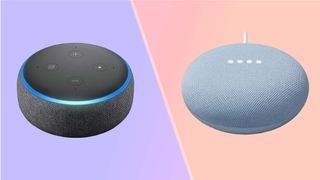
Alexa vs. Google Assistant is the Ali/Frazier of phonation assistants. Both are backed by 2 of the heavyweights of tech, and both offer, on paper, many of the same features and functionality.
So which is the best virtual assistant? We put Alexa and Google Assistant through an 11-round bout past asking them a bombardment of questions, comparing their power to provide directions and recipes, their smart home capabilities, entertainment options, and more than.
- The best Alexa compatible devices
- All-time Google Home uniform devices
While these administration offer many of the same features, each has its own advantages and disadvantages. And, of form, both are evolving at a rapid clip. But this is how they fare today.
Alexa vs. Google Banana: Voice recognition
Reliability is important for whatever sort of banana, virtual or not. I kept track of how frequently I needed to repeat myself or rephrase a question for an assistant to become it. Both Google and Alexa did pretty well, occasionally requiring a repeated or rephrased query but generally answering requests promptly and to the best of the devices' abilities.
Of course, it can exist quite confusing if you accept multiple people in a household, and each banana tries to tackle this trouble in its own fashion. Both Google and Amazon Repeat at present offer multiple voice profiles, so you can train the device to recognize your specific voice and provide some degree of personalized response based on this.
Google'south Voice Match is the most sophisticated of these approaches, offer personalized calendars, flights, payments, photos and more; you can even gear up your own default media services. Nevertheless, I have not infrequently encountered bug with information technology recognizing my voice and refusing to give me admission to my information until I've retrained my Vox Match.
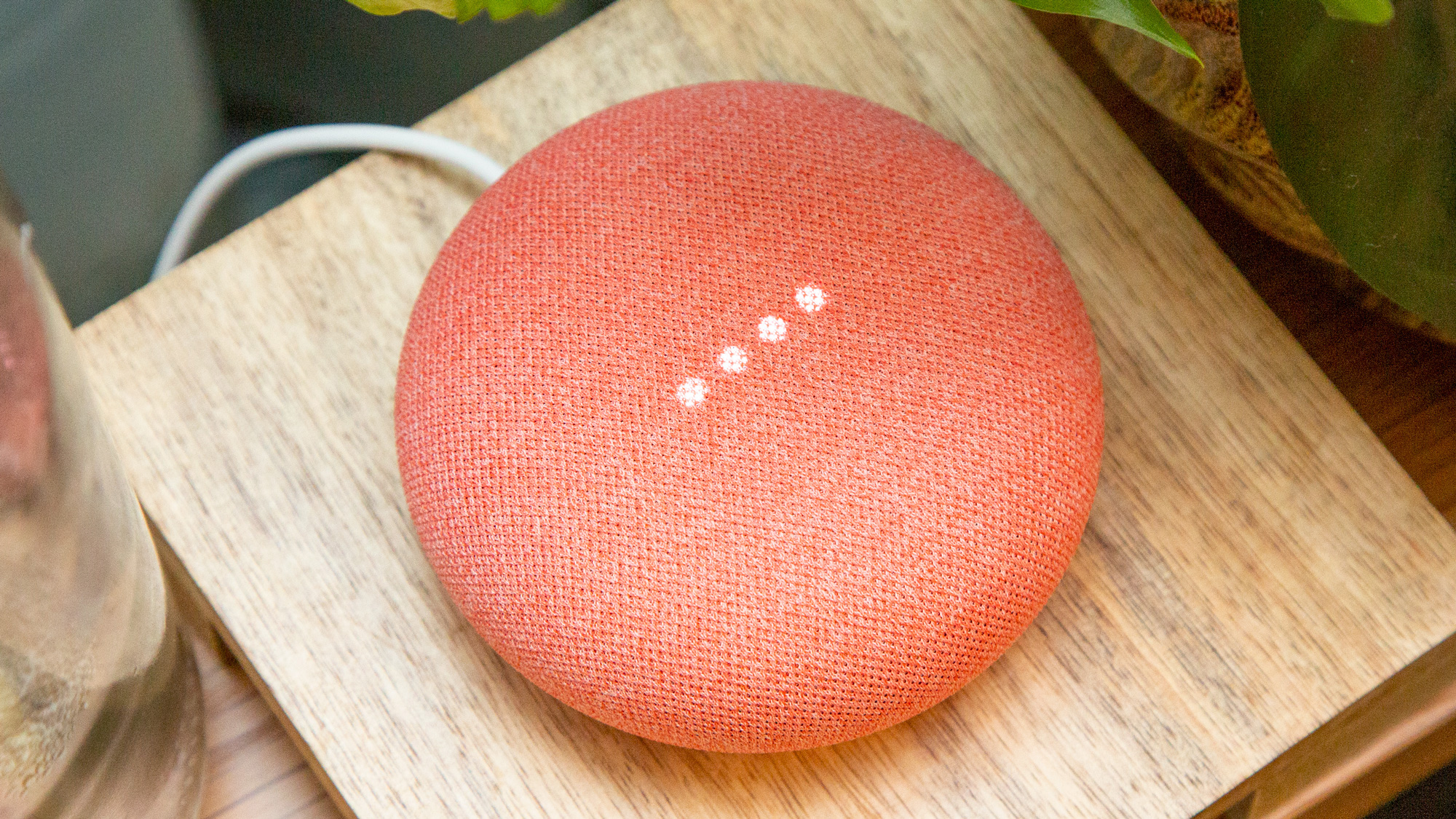
Alexa, meanwhile, currently offers simply personalized shopping, calling and messaging, and express media options, though it does have a nifty Invitee Connect feature that lets you connect to a friend's Echo device if, for case, you lot're staying with them, to get access to your own information.
Alexa and Google Banana as well have two voice-related features worth noting: First, both accept an optional "follow-up" style, in which they remain active for a few seconds after answering your query, so you lot can issue another command without proverb the wake discussion again. This style is off by default in both cases, since it tin can atomic number 82 to some false positives. Secondly, both can empathise "and" both in commands and in items, then you can say "turn off the lights in the function and plow on the lights in the living room" or "add milk and bananas to my shopping list" without, say, getting a single item labeled "milk and bananas."
While Amazon will probable continue to improve its support for multiple profiles, Google'southward more all-encompassing personal results definitely make it the superior assistant in this area.
Winner: Google
Alexa vs. Google Assistant: Full general Knowledge
We tasked each of the digital assistants with a battery of 20 general-knowledge questions.
While both assistants are more competent than ever, Alexa continues to narrowly edge out Google Assistant in the full general knowledge realm, taking top honors largely because information technology provided better answers to several questions. For example, it could tell me when the season premiere of Westworld aired, while the Google Assistant wanted to read me a synopsis of the episode.
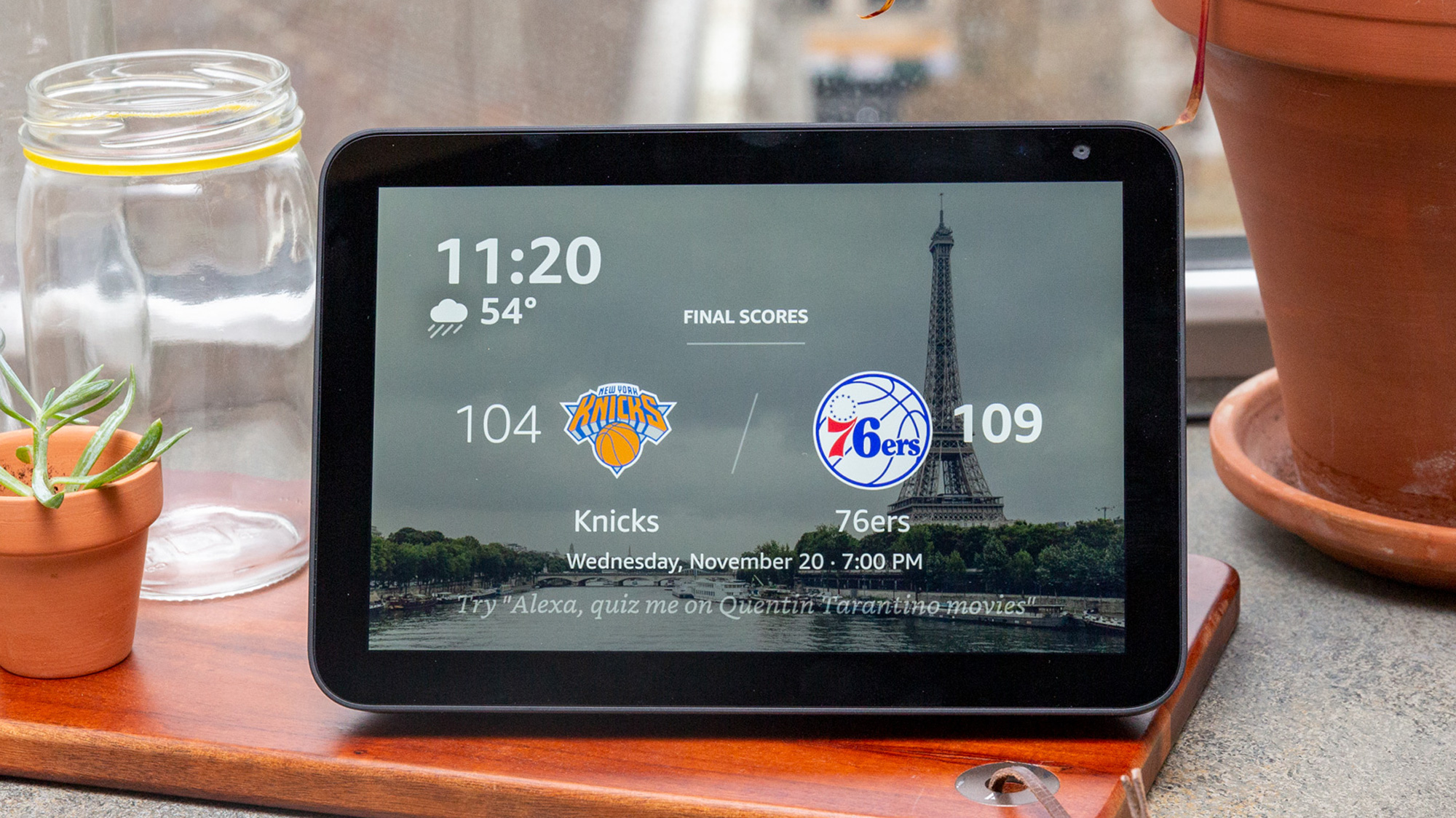
Bizarrely, while Alexa was finally able to reply questions about the all-time stolen base of operations leader after a rephrase, the Google Banana just couldn't fathom this question, even though it had answered it correctly in our previous shootout.
Neither did dandy when I asked virtually the first secretary-general of the Un, though the Google Nest Hub was at to the lowest degree able to provide the answer in an onscreen display, if non read it aloud. Notwithstanding, the answers and comprehension from both Alexa and Google Assistant were generally spot on, requiring footling rephrasing and rarely forcing me to enquire more once.
Google Assistant'due south results were pretty close to those from Alexa. It generally gave solid, fast answers with context, though sometimes with too much or too technical information. For case, when I asked why the sky was blueish, Google Assistant went on a lengthy explanation about diffuse sky radiation that would have whatsoever v-year-quondam's optics glazing over.
Winner: Alexa
Alexa vs. Google Assistant: Music and podcasts
Music should be a strong accommodate for whatever smart assistant. Both assistants patently integrate with their company's corresponding music services, and in some cases offer the ability to link to tertiary-party offerings too.

Alexa adroitly handled a asking to play the Rolling Stones' "Paint It Black" (because I have it linked to my Apple Music account). Even though I don't subscribe to whatsoever of the pay music services supported by the Google Assistant, information technology still played "Pigment information technology Black" and a playlist containing other Rolling Stones songs on YouTube Music.
- How to play Apple Music with Alexa
| Music Service | Alexa | Google Banana |
|---|---|---|
| Amazon Music | Yep | No |
| Apple Music | Yes | Only on iOS |
| Deezer | Yes | Yes |
| Gimme | Yes | No |
| Google Play Music | No | Yes |
| iHeartRadio | Yes | Yeah |
| Pandora | Yes | Yes |
| SiriusXM | Yeah | Yes |
| Spotify | Yep | Yes |
| TuneIn | Yep | Yes |
| Tidal | Yes | No |
| Vevo | Yes | No |
| YouTube Music | No | Yes |
| Totals | xi | nine |
Both assistants responded to my asking to play upbeat '80s music and West Declension jazz by offering upwardly stations that matched those descriptions.
In terms of existence able to find and play podcasts, both administration have improved farther since our final comparison. Alexa now lets you link your Apple Podcasts account like a music service, giving tighter integration for those on iOS devices and Macs, while Google Podcasts seems to have improved on the Banana. Non only did both assistants easily play the most contempo episodes of both "Wait Expect ... Don't Tell Me!" and "The Unequalled" podcasts, but they even handled the more obscure Australian testify "Dragon Friends."
Both assistants offer some form of multiroom audio functionality, including creating groups of speakers via your smartphone. Alexa and Google Banana also back up audio playback from some music services to Sonos speakers, while Google Assistant can communicate with whatsoever Chromecast-connected speaker. And both Google Assistant and Alexa also come congenital in to a number of the best smart speakers.
In the end, Alexa gets the edge here, cheers to having slightly more integrations, including with a service equally big equally Apple Music and Apple Podcasts, which is yet the largest podcast directory around.
Winner: Alexa
Alexa vs. Google Assistant: Entertainment
Integration with domicile amusement equipment is i of the coolest features of virtual administration. With Alexa, you can now command your Amazon Fire Television receiver, Fire Television receiver Stick or Fire TV Edition, including opening apps, jumping around in time, and playing and pausing. Google Assistant tin likewise control playback on Chromecast-connected devices, including TVs with Chromecast built in. However, it offers simply a few services, and you have to link some of the apps via your smartphone beginning. Alexa and Google Assistant tin can control devices using a third-party intermediary device like the Logitech Harmony Elite universal remote.
- Who makes the smartest smart Telly?
Continuing with the entertainment track, I tried to use the assistants to social club movie tickets for Pixar's Onward, which ended upwards being far more work via vox than merely using a adept old-fashioned spider web browser. Alexa had no problem giving me showtimes at nearby theaters, but when I tried to buy a ticket, information technology sent me to the Atom Tickets skill, which was tiresome, clunky, and sometimes got stuck in repetitive loops—information technology took me a while to get information technology to understand that I wasn't trying to guild tickets for the current 24-hour interval. However, the skill does let you lot pick up where you left off, plus information technology can handle theaters with reserved seating.
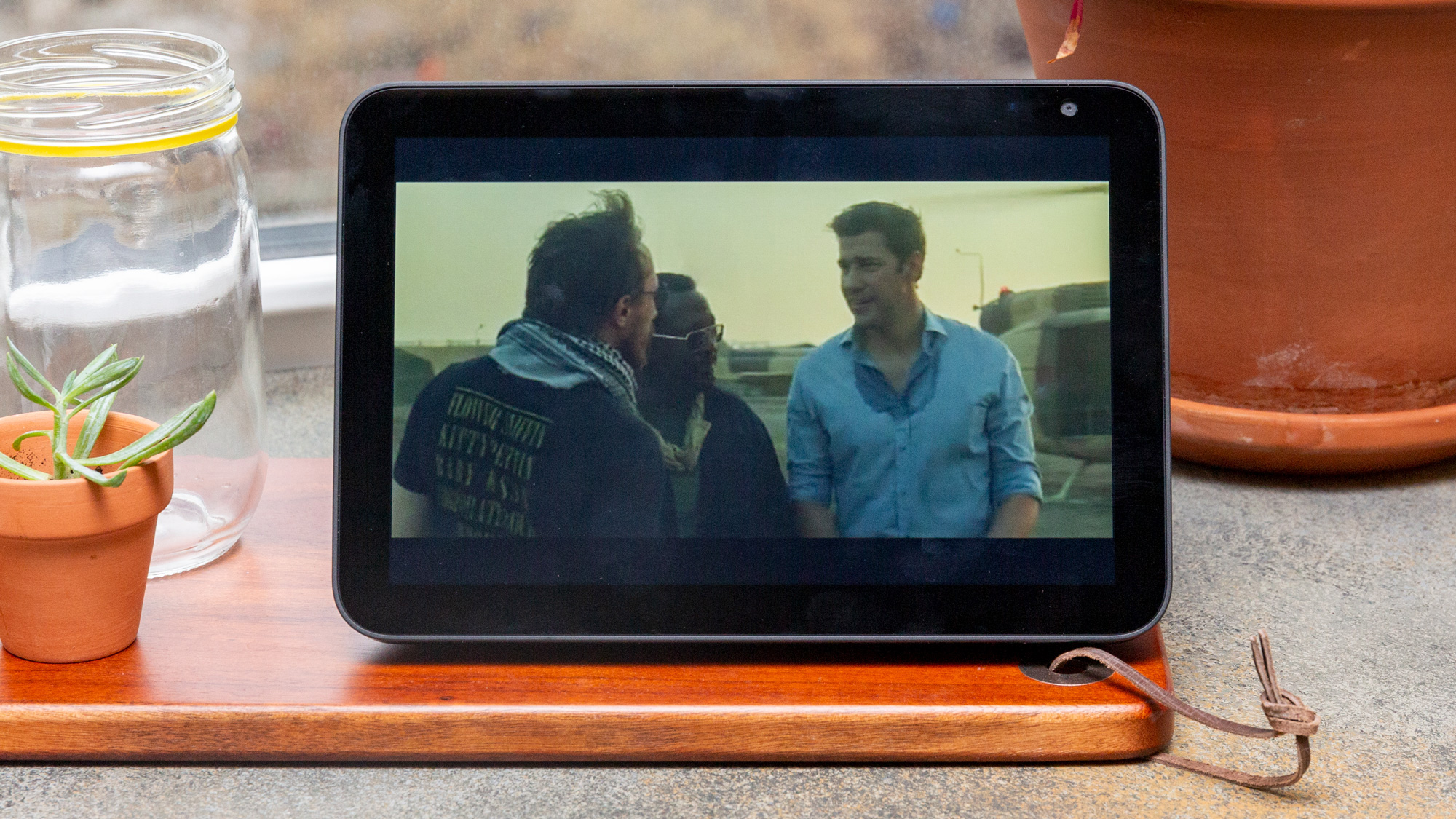
Google Assistant could likewise handle my requests for showtimes at my nearby theaters, but it didn't provide an option for buying tickets direct on my Google Nest Hub by voice.
Winner: Alexa
Alexa vs. Google Assistant: Ordering food, making reservations and getting recipes
Using both assistants, I tried a handful of queries related to ordering nutrient, making reservations, and getting recipes. Both assistants offered recommendations for a practiced Indian restaurant in my neighborhood, including varying details such as address, rating, and prices.

Neither of the assistants could place an order for Chinese food. At best, they provided a listing of restaurants nearby; at worst, Alexa tried to society packages of food from Amazon. Google, at to the lowest degree, recognized the general idea and provided me with a list of nearby Chinese restaurants.
Making reservations at a eating house worked through Alexa, though it required a slow multistep procedure via OpenTable. Google Banana also handed off reservations requests to OpenTable; the process was definitely a piddling chip smoother, but it failed at the terminate, and couldn't give me a reason why.
Google passed the "chocolate bit cookie recipe" test with flying colors, even walking me through the recipe footstep past step. Alexa was almost as good, offer multiple recipes, providing a list of ingredients, a recipe way, and giving me the pick to get the recipe in the Alexa app.
Winner: Tie
Buying things using your vocalization seems like it should be a good feature, but in practice, it still feels cumbersome. Alexa should have the reward hither, thanks to its tight integration with Amazon. By default, it seems to handle most purchase requests by searching the Amazon catalog for something matching the query, so adding that to your Amazon cart, which can occasionally have unintended results.

Alexa adroitly handled "lodge some more than paper towels," though when I asked for a copy of the game Star Wars Jedi: Fallen Order, the assistant kickoff added a bundle with both the game and the Xbox console, which was a scrap more than than I was looking for. While there is a Purchase Information technology Now option via the Echo, you do have the choice to review your cart on your phone (or the Amazon website) before ordering, which is a plus. You lot can also utilise Alexa to add items to your shopping list and your wish list, though in the latter case, if information technology'southward not a specific item—i.e. "Ethernet cable"—it simply shows up as a generic "thought" in your wish list.
Google Assistant did about as well as Alexa in my test, though the Domicile Hub wanted to use the screen for much of the experience. Information technology was able to add both paper towels and a copy of Star Wars Jedi: Fallen Order to my shopping cart, just the items I requested were out of stock, and then I couldn't complete the social club.
In the end, Amazon is the biggest online store around, and Alexa's tight integration with beingness able to buy things, without having to enter extra account information or choose between stores, gives it the leg up.
Winner: Alexa
Alexa vs. Google Assistant: Telephone calls, video calls and texts
Sometimes, you lot're tired of interacting with a robot and desire to talk to a existent person. Fortunately, both virtual administration tin put you in touch with your contacts.
With Alexa, you can call and send messages in sound or text to any other Alexa user in your contacts (including those who have simply the smartphone app); you tin likewise call any phone number or any contact whose phone number y'all take in your contacts. Standard text messages, however, work merely if you lot accept the Alexa app on an Android phone. Once you've set it up, the phone call will even appear to come from your actual phone number.
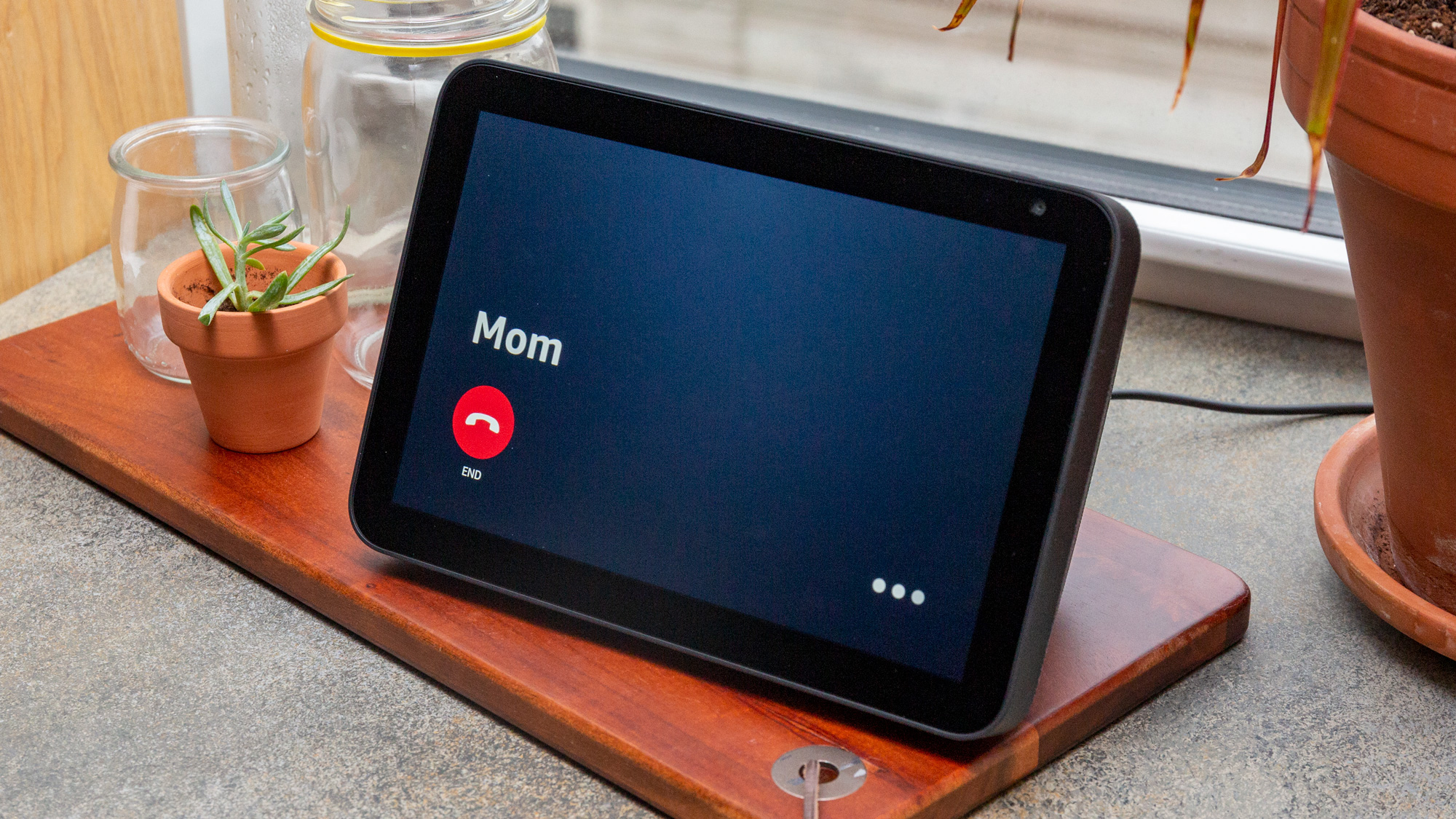
If you lot have an Echo Show, you can likewise make video calls to other Echo Evidence owners or to people using the Alexa smartphone app. And Alexa offers an intercom feature that lets you broadcast a message to all other Echo devices in your dwelling. Amazon has also recently added support for Skype, including making audio calls, calls to telephone numbers, and fifty-fifty video calls via the Echo Testify.
Google Assistant likewise lets you make calls to people in your contacts via the phone, though you have to configure information technology and then that calls appear to come from your Google Vocalism number, one of your other phone's numbers, or an unlisted number. Notwithstanding, you tin't transport text messages with Google Assistant without a workaround using IFTTT. Dissimilar Alexa, Google Assistant can make international calls, if linked to a Google Fi account or Google Voice account that has credits. The Google Nest Hub Max supports video calls via Google Duo.
Despite Google's fine functioning in this arena, the integration of the popular Skype service and intercom feature put Alexa slightly over the acme.
Winner: Alexa
Alexa vs. Google Assistant: Directions
Google Assistant was at the pinnacle of the heap here. Non only does information technology requite solid time estimates in most cases, only it was also the only one that could handle public transit at all (and its suggestions were reasonable). It also did the best in giving me an overview of traffic atmospheric condition in the region, and it can send directions to the Google Banana app on my telephone, where it's easy to start navigation from Google Maps, Apple Maps or Waze.
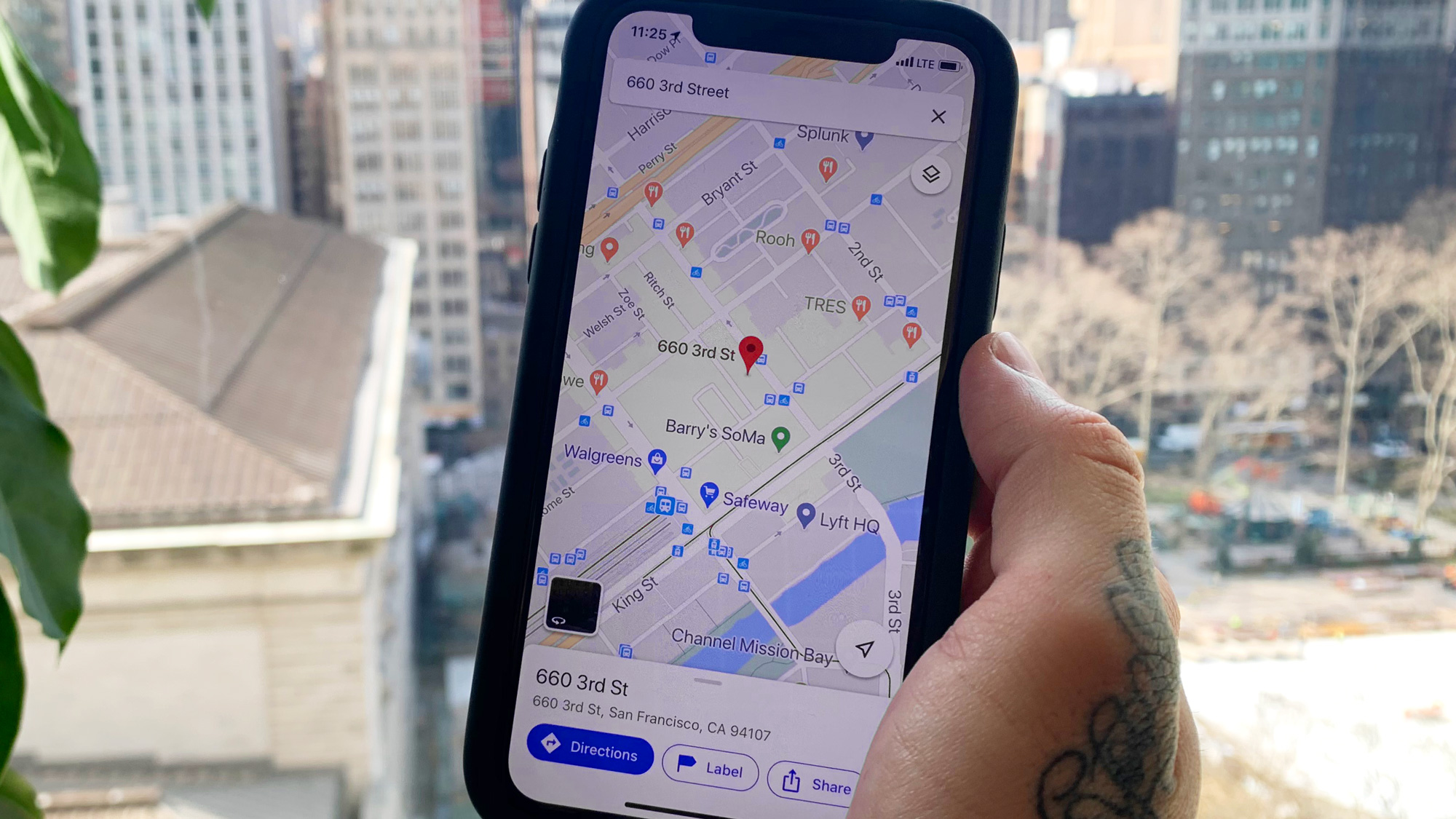
Alexa has improved, but all the same lags behind. Its directions to local spots were reasonable, merely it was utterly unable to handle public transit. And when I asked well-nigh traffic conditions on the local interstate, its estimates were a lot rosier than Google's—and I know which 1 I'd trust. A new feature is supposed to allow you to send traffic weather condition to your telephone, but it never worked for me—Alexa only kept telling me she couldn't find that device.
Worth noting: Both assistants still whiffed when I asked what time the adjacent motorbus on my closest neighborhood road arrived.
Winner: Google
Alexa vs. Google Banana: Smart home
Smart abode devices accept get some of the most important places for integration with virtual administration; both platforms have focused some fourth dimension and attention on this. Alexa and Google each piece of work with a huge breadth of connected products, and many—if not most—3rd-party products work with both.

However, you can practice a lot more than with those devices when continued to Alexa than you can when they're linked with Google Assistant. For example, with Alexa, you can have your smart lights turn on if Alexa hears a window breaking or a fire warning; or, you can activate smart dwelling house devices based on your location. With few exceptions, Google Assistant just lets you control individual smart home devices by creating a schedule or past speaking a command.
Winner: Alexa
Alexa vs. Google Assistant: Availability
A voice assistant isn't worth much if it doesn't work where you want it. In addition to its broad offerings, from the $35 Echo Dot to the $229 Echo Evidence, Amazon besides has the most third-political party partners for Alexa, since you can purchase a cheaper speaker from the likes of Anker. Or, if you need meliorate sound quality, you can buy the Sonos One, which has both Alexa and Google Assistant built in. Both administration are available via an app you tin can download on iOS and Android devices.
Google has released smaller versions of the Abode, including a cheaper unit (the Mini) and 1 with better sound quality (the Max). Google is also working with tertiary parties, and Google Assistant is available on both Android and iPhones, though features are somewhat limited on the latter.
Like Amazon, Google as well offers ii smart displays, the Nest Hub and Nest Hub Max; the latter model has a larger screen and includes a camera for video-calling support. Google Banana besides works with a handful of tertiary-party smart displays, such as the Lenovo Smart Display.
As for international availability, both Google Assistant and Alexa are available simply in some regions around the world. Google's language availability depends on the region you lot're in—not all languages are bachelor in all regions or on all devices—simply at least 19 are available in the U.South. Yous tin also even add a second language on the same device, and information technology will empathise queries in either, though you can't switch back and forth inside the aforementioned query. The Google Banana besides features a very clever interpreter way in which you can ask information technology to translate phrases from another linguistic communication—a exact form of Google Translate.
Alexa's language support is more complex: it can speak English (U.S. and U.K.) and German, and Japanese support is available in limited trials. In some countries it also offers multilingual style, allowing you to use pairs of language, such as Spanish and English in the U.S., English and Hindi in India, and English and French in Canada. Alexa is available in 41 countries, though not all Echo devices are available in each 1. Though Alexa doesn't handle translations between languages natively, there is a third-political party skill that can do and then, though it's more cumbersome than Google'southward built-in offering.
Winner: Google
Alexa vs. Google Assistant: Skills and actions
Built-in features are all well and good, simply sometimes you really want to add a feature that just isn't part of the package. In that example, you lot may demand to turn to a 3rd party.
Alexa has more than than 100,000 third-party skills. Not all of these are the all-time Alexa skills, but chances are you can find something to see your needs. And if yous tin't, you lot can ever create some bones integrations using the IFTTT web service or create your own simple routines via the Alexa app. The company also offers templates for some simple apps, such as game shows and information for houseguests, via its Alexa blueprints feature.
Google has taken a dissimilar tack with what it has dubbed actions. The Google Assistant claims it features more than a million actions, but they basically include all possible queries from both outset- and third-party offerings, so it'due south hard to brand a straight comparison between the all-time Google Banana commands and Alexa's library. Google as well offers the all-time integration with IFTTT, letting y'all create custom actions without any existent cognition of programming.
Winner: Tie
Alexa vs. Google Banana: Overall winner
| Alexa | Google Assistant | |
|---|---|---|
| Voice Recognition | X | |
| General Knowledge | X | |
| Music & Podcasts | X | |
| Amusement | X | |
| Ordering Food | X | 10 |
| Online Shopping | 10 | |
| Communications | X | |
| Directions | Ten | |
| Smart Dwelling | 10 | |
| Availability | X | |
| Extendability | 10 | Ten |
| Totals: | 8 | 5 |
In the terminate, the race was a shut i, with Alexa pulling ahead of Google Banana, cheers to stiff performance in the smart dwelling house and communications arenas. But Google was certainly no slouch, and the fact remains that both are still strong choices, depending on which capabilities you prioritize. While both practise pretty well in the example of general knowledge and extendability, for example, if y'all want the broadest possible support for music and podcast services, Alexa is probably the 1 to choice. If, on the other hand, you accept a household with multiple people in it, each of whom desire to get their own personal information via a smart speaker, Google Banana might exist a better selection.
Both Amazon and Google are pushing their virtual assistants at a rapid pace, adding new features and capabilities on a monthly (if non weekly) basis, then there's always something new to discover. Here'due south hoping that they'll eventually exist able to tell me when that bus is going to show up.

Source: https://www.tomsguide.com/face-off/alexa-vs-google-assistant
Posted by: maymanded.blogspot.com
0 Response to "Alexa vs. Google Assistant: Which smart assistant wins?"
Post a Comment